Heavy product build-up quietly steals throughput, raises pumping costs, and shortens the service life of the pipeline asset you rely on. Strong pipeline cleaning strategies give you a way to restore flow, protect assets, and avoid unplanned shutdowns across long runs. You gain back capacity that scale, wax, paraffin, and construction debris have taken from your operation.
Cleaning a heavily fouled line is not a single-pig job, and the wrong approach can strand equipment or damage internal coatings. You need a staged plan that starts soft, builds aggression, and confirms progress at every step along the way. A disciplined sequence protects the pipe while pushing debris out the receiving end in manageable loads.
What Are the Best Pipeline Cleaning Strategies for Heavy Build-Up?
The best pipeline cleaning strategies stage progressively aggressive pigs, starting with soft foam and moving toward brushed or bladed tools. You verify results between runs using pressure readings, receiver inspections, and detection signals along the line. A staged approach protects the pipeline while pushing debris out in loads your receiving equipment can handle safely.
Understanding What You Are Cleaning Out of the Line
Every fouling problem looks different once you cut the line open, and the right cleaning plan starts with an honest diagnosis. Wax, paraffin, black powder, mill scale, and construction debris each respond to different pig geometries and pass counts. You save cycles and reduce risk when your first move matches the deposit sitting inside the pipe.
Fouling is not a marginal issue for aging assets across the United States and beyond. According to Pipeline and Hazardous Materials Safety Administration (PHMSA), the nation operates more than 2.6 million miles of pipelines transporting natural gas and liquid petroleum products. In industrial process systems, deposits that build up inside pipelines can gradually reduce flow efficiency, increase pressure losses, and require more frequent cleaning to maintain design performance.
- Wax and paraffin in crude and heavy hydrocarbon lines
- Black powder in dry gas systems with corrosion history
- Mill scale and construction debris in newly commissioned pipe
- Biofilm and scale in water and produced water service
Furthermore, older lines often carry combinations of these deposits, which drives the case for staged pipeline cleaning strategies.
Staging Your Pigging Program for Heavy Deposits
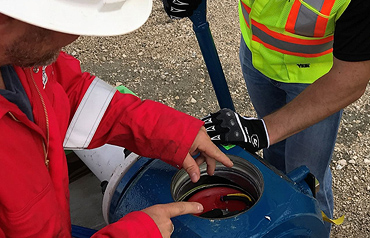
A staged run protects the pipeline while pulling deposits out in loads your receiving equipment can handle safely. You begin with a soft swab or bare foam pig to gauge the line and confirm passage before any aggressive cleaning starts. Meanwhile, pressure differential and receiver contents tell you how heavy the fouling actually is inside the run.

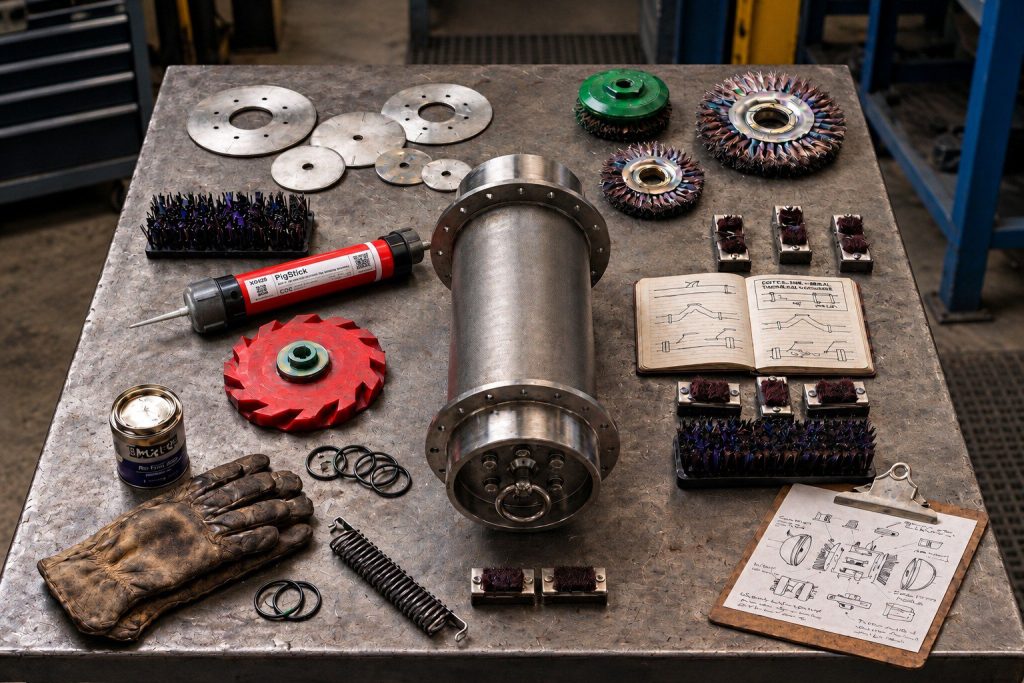
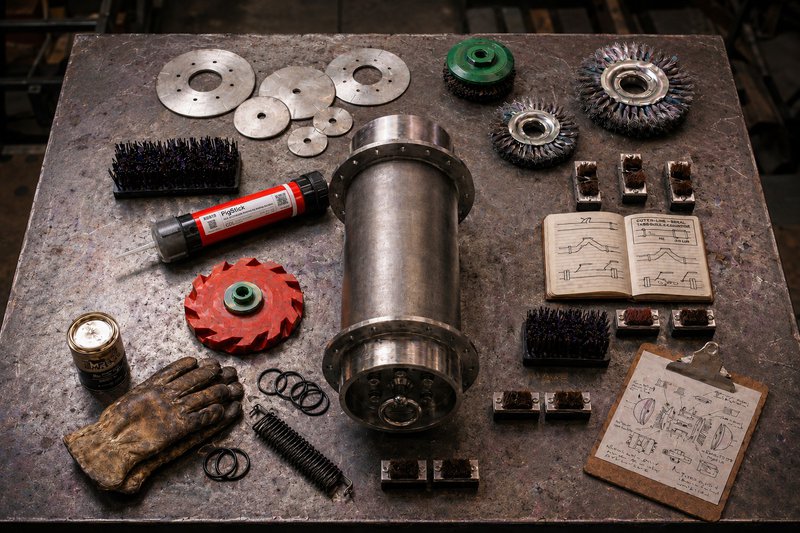
Once the line accepts a soft pass, you can move up to coated foam, then to solid-cast tools with cups and discs. Girard offers foam options in swab, bare, and heavy-duty configurations, and you can review them on our Polly-Pigs page before ordering. Meanwhile, Turbo-Pigs hold their shape across repeated runs on fouled lines.
Confirming Progress Between Runs
Detection along the line tells you when a pig arrives, how long a run took, and whether behavior looks normal. Our pig detectors support pipeline cleaning strategies that depend on staged verification between passes. Consequently, your operators get real data instead of guesswork during multi-day cleaning campaigns.
Protecting the Line While Removing Debris
Aggressive cleaning delivers results only when the pipeline survives the process without coating damage or stuck-pig events. You need brush stiffness, cup durometer, and disc configuration matched to the pipe wall condition and internal geometry. A pig that overpowers a weakened section can create bigger problems than the fouling it was meant to remove.
Pipeline cleaning strategies for heavy debris rely on realistic pass counts rather than one aggressive run intended to finish the job. Additionally, receiver capacity matters because a large slug of debris can overwhelm downstream separation equipment during recovery. Read our post on pipeline flow assurance with engineered pigging solutions for supporting context.
Tracking systems help on long runs where line-of-sight verification is not practical for your field crews.
- Pig tracking for buried and remote sections
- Detection points at intermediate valves and stations
- Receiver monitoring for volume, temperature, and pressure
Furthermore, our company page outlines the manufacturing background that supports these decisions.
Ready to Build Better Pipeline Cleaning Strategies?
You do not have to guess your way through a heavily fouled line, and staged pigging gives you a repeatable path forward. Girard Industries has manufactured pipeline pigs in Houston, TX since 1968, and our team can help you scope a workable sequence. Explore the full lineup on our products page before your next campaign begins.
Whether you are recovering a single fouled segment or planning a multi-year cleaning program, the right partner shortens your learning curve. Our engineers will walk your line specs, deposit history, and receiving equipment to recommend a staged plan that fits your operation. Connect with us through our contact page to open a conversation with our team.