
Facilities maintenance teams carry the weight of uptime, hygiene, and cost control across every process line in a plant. Sanitary pipeline cleaning tools help you cut waste at the source while protecting product quality and worker safety. You recover stranded product, shorten cleaning cycles, and reduce the water and chemical load your team manages daily.
Waste hides in places most plant walkthroughs miss, and transfer lines are one of the biggest offenders. Every batch leaves residue behind, and every rinse pushes value into wastewater treatment rather than into finished goods. Pigging equipment closes that gap and gives your maintenance program a measurable lever to pull.
How Do Sanitary Pipeline Cleaning Tools Reduce Waste?
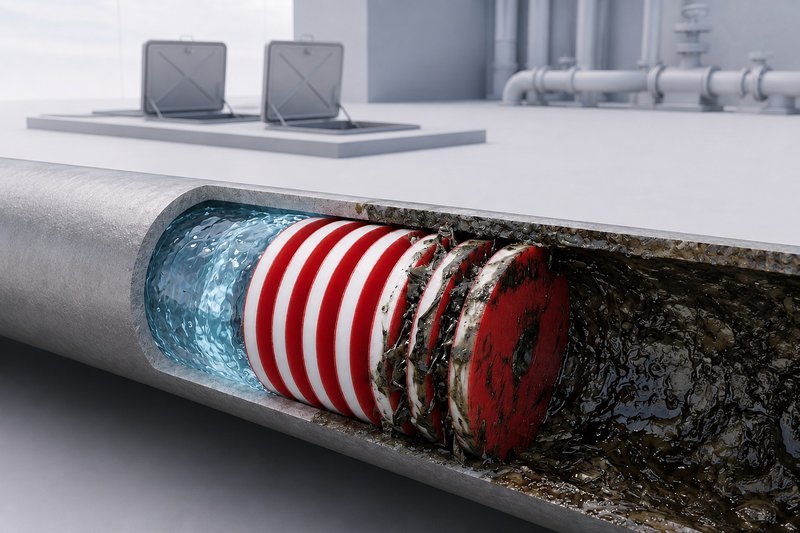
Sanitary pigs push residual product through transfer lines to a receiving vessel before rinse water or chemicals ever touch the pipe. You capture sellable product, cut wastewater volume, and shorten clean-in-place cycles between production runs. The combined effect lowers utility spend, raises first-pass yield, and gives facilities maintenance teams a repeatable waste-reduction tool.
Where Facilities Maintenance Teams Lose the Most Value
Most plants underestimate how much product and utility spend leaks out through routine line changeovers. Facilities maintenance teams often focus on pumps, valves, and heat exchangers while transfer lines quietly bleed margin every shift. You can recover a meaningful share of that loss with the right pigging program in place.

Water and wastewater costs alone justify a hard look at line-cleaning practices across the plant. According to EPA, industrial facilities in the United States account for roughly 5 percent of total freshwater withdrawals nationwide. Cutting rinse volume on shared transfer lines feeds directly into corporate sustainability targets.
- Product stranded in transfer lines between batches
- Excess rinse water pushed to effluent treatment
- Extended clean-in-place cycles that block production hours
- Cross-contamination risk on shared allergen or recipe lines
Furthermore, longer changeovers mean fewer available production hours, which pressures every downstream schedule. Read more on flow recovery in our post on pipeline flow assurance with engineered pigging solutions.
Choosing the Right Tools for Sanitary Service
Sanitary service asks more of a pig than most pipeline duties across oil, gas, or water applications. You are moving edible product one shift and running caustic wash the next, so equipment has to handle both without degrading. Selection starts with a hard look at your product, your temperature range, and the cleaning agents your plant already relies on.
Foam density and outer coating shape how a pig behaves against sticky residues, sugar buildup, or fatty films. Girard offers foam Polly-Pigs in swab, bare, and heavy-duty configurations to match different soil loads across your lines. Explore density and coating options on our Polly-Pigs page before locking in a specification.
- Swab-grade foam for light residue and drying passes
- Coated foam for moderate scale and film removal
- Solid-cast Turbo-Pigs for repeated cycles on shared lines
Solid-cast options like Turbo-Pigs hold their shape across many runs, which lowers per-cycle cost on high-frequency changeovers.
Building Pigging Into Your Maintenance Program
A pigging system delivers full value only when your facilities maintenance program treats it as a standard operating procedure. You need clear roles, documented cycles, and inspection intervals baked into your computerized maintenance management system (CMMS). Operators, supervisors, and quality staff all need to understand how the pig moves and what a normal cycle looks like.
What Metrics Should You Track for Pigging Programs?
Track recovered product volume, water saved per cycle, changeover minutes, and any stuck-pig events over a rolling quarter. Pair those numbers with clean-in-place chemical use and effluent volume to see the full picture. Your facilities maintenance dashboard should surface these figures alongside standard uptime and safety indicators.
Meanwhile, review your metrics quarterly so continuous improvement drives the program rather than one-time gains.
Ready to Cut Waste Across Your Facilities Maintenance Program?
You have real dollars moving through your transfer lines every shift, and pigging gives you a practical way to keep more of them. Girard Industries has manufactured pipeline pigs in Houston, TX since 1968, and our team can help you scope the right solution for your plant. Learn more about our background on our company page.
Whether you are piloting pigging on one line or standardizing it across multiple plants, the right partner shortens your path to results. Our engineers will walk your line specs, product characteristics, and cleaning goals to recommend a workable rollout plan. Head over to our contact page to reach our team and get started.