Dual-diameter runs push standard pigs past their design window and turn routine cleaning into a real engineering problem. Complex piping systems with size changes, tight bends, and mixed geometries demand tools built to flex without losing their seal. You need a solution that handles both diameters in one pass while protecting throughput and internal coatings.
Getting dual-diameter pigging right saves shutdown hours and prevents stuck-pig events that stall an entire production schedule. A planned approach based on pig geometry, material, and staged verification gives your crew a repeatable path forward.
How Do You Solve Dual-Diameter Challenges in Piping Systems?
You solve dual-diameter pigging challenges by selecting flexible pigs sized for the smaller diameter while sealing against the larger one. Special Dual-Diameter Cups, Slotted Discs, foam, and specific durometers let a single tool transition between sizes without stalling or damaging the line. Staged verification through pig detectors, transmitters, and pressure readings confirms each pass and reduces risk across complex piping systems.

Why Dual-Diameter Runs Break Standard Pigs
Standard pigs seal well at a single diameter, but size transitions expose weaknesses that show up fast in the field. A pig sized only for the larger pipe can become stuck when it reaches a smaller section. A pig sized only for the smaller pipe, meanwhile, may stall in the larger section. A purpose-designed dual-diameter pig is built to accommodate both pipe sizes, maintaining the seal and sweeping performance needed throughout the run.
Aging assets amplify the challenge across long production networks. According to the Pipeline and Hazardous Materials Safety Administration (PHMSA), the United States operates more than 2.6 million miles of pipeline. In industrial facilities, mixed-diameter sections can result from historical tie-ins, repairs, debottlenecking projects, and capacity expansions, creating additional considerations for pig selection and pipeline cleaning.
- Reducers and expansions at station tie-ins
- Bypass loops around metering or filtration equipment
- Replaced pipeline sections
- Legacy diameter changes at property or operator boundaries
Also, older networks often carry multiple transitions in a single run, which compounds the selection problem for your crew.
Choosing the Right Tools for Dual-Diameter Service
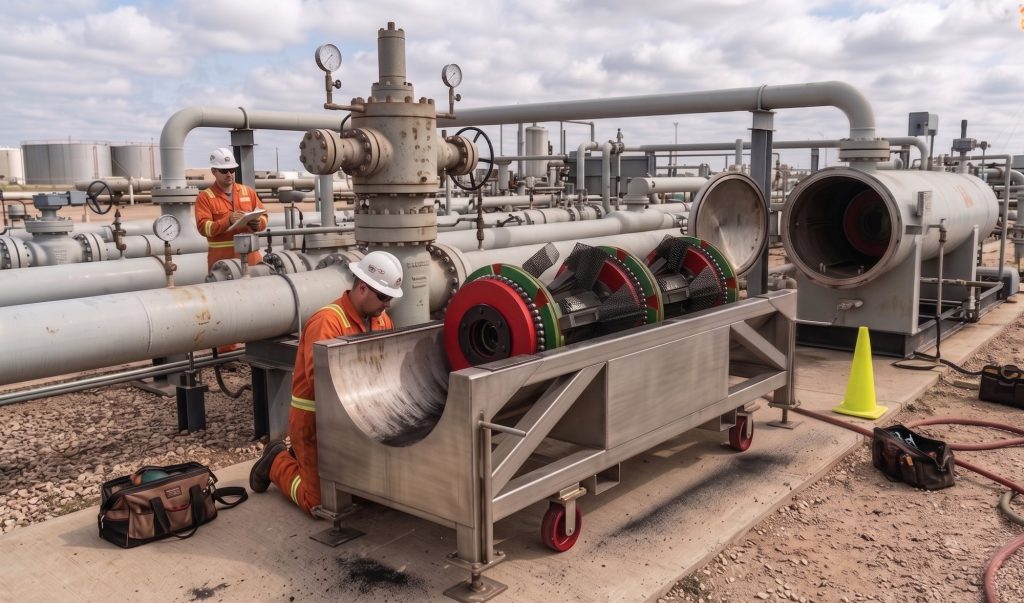
Dual-diameter success starts with pig geometry, and cup shape carries most of the load in mixed piping systems. Conical polyurethane cups flex enough to seal at the larger diameter while still clearing the smaller one without binding. You extend the working range of a single tool and reduce the number of pigs your run has to swap through.
Foam Polly-Pigs also handle transitions well because the body compresses and expands to match pipe walls along the run. Girard offers dual-diameter foam options and coated variants on our Polly-Pigs page for demanding service. Meanwhile, Turbo-Pigs give you solid-cast options with cup and disc configurations suited to mixed geometries.
Matching Durometer to Diameter Range
Softer durometers flex through tighter transitions but wear faster on abrasive residues along the run. Harder compounds hold shape longer but limit how much diameter change you can pass in one cycle. You balance those trade-offs by consider debris type, run length, and diameter delta before you order.
Verifying Progress Through Complex Piping Systems
Detection matters more on dual-diameter runs than on straight, single-size pipe, because behavior changes at every transition point. You need real signals from the field telling you a pig has passed, stalled, or slowed at a known location. A staged program built on verification protects the asset and gives your crew confidence between passes.

Our pig detectors confirm passage at intermediate points along complex piping systems and reduce guesswork during troubleshooting. Additionally, tracking systems support long or buried segments where operators cannot walk the line for visual confirmation.
- Detection at every diameter transition
- Pressure differential monitoring across the run
- Receiver checks for pig condition after each pass
Read more on staged verification in our post on pipeline cleaning strategies for heavy build-up. Consequently, your team gains real data across every pass rather than a single pass-fail answer at the receiver.
Ready to Solve Dual-Diameter Pigging Challenges?
You do not have to accept stuck pigs or missed sweeps as the cost of running mixed-diameter lines. Girard Industries has manufactured pipeline pigs in Houston, TX since 1968, and our team can help you scope a workable dual-diameter plan. Explore the full lineup on our products page before your next campaign starts.
Whether you are commissioning a new tie-in or cleaning legacy piping systems with multiple transitions, the right partner shortens the path to results. Our engineers will review your run specs, diameter changes, and deposit history to recommend a tool set that fits your operation. Send a note through our contact page to bring our team into the conversation.